The Bulb That Stays On: Notes on the Ghost Light and the Art of Not Quite Leaving
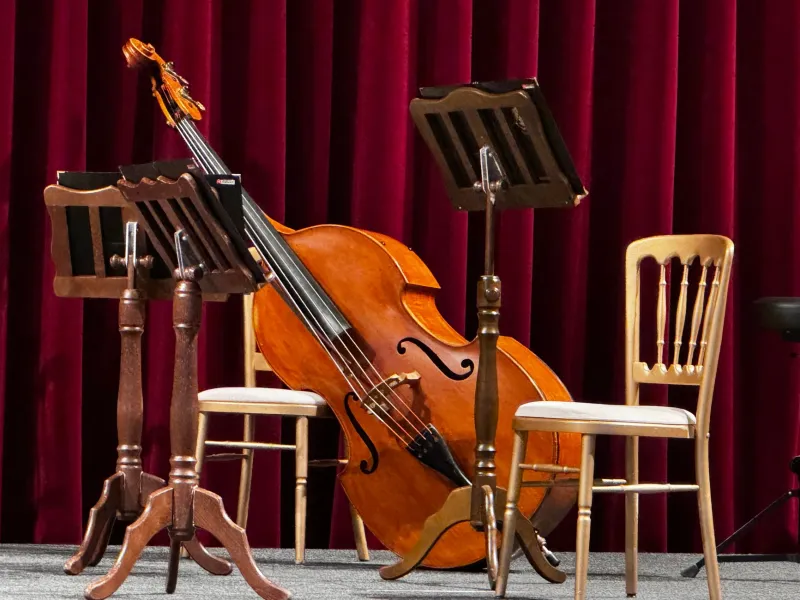
The end of a get-out is rarely dramatic. There is no curtain call for the last roll of gaffer tape, no applause when the final flight case is wheeled down the ramp. There is just a venue slowly getting quieter, a kettle being unplugged, and a stage that looks much bigger once the set has gone. Then someone walks to the middle of the floor and leaves a single bulb burning.
That is the ghost light. You have probably seen one without registering it: a bare lamp on a tall stand, sometimes with a little cage around it, sometimes looking like it has been borrowed from a very sensible garage. In an empty theatre it can feel almost comically small. It is also one of the most quietly meaningful habits in the whole building.
The Last One Out
On a typical get-out, the last hour is a blur of cables, cases and someone asking whether the van driver wants a brew. The stage is stripped, the wings are swept, the notices come down. The building stops being a show and becomes a room again. That transition is always a bit odd. For weeks the space has had a routine — calls, cues, warm-ups, the same three jokes by the stage door — and then, quite suddenly, it has none.
The ghost light is the last bit of routine. It is switched on when the main working lights go off, and it stays on until the next person arrives. In practical terms it means nobody walks into a pitch-black auditorium and starts playing a game of find-the-light-switch with a flight case. It means the first person in on a Monday morning can see the edge of the stage, the steps into the wings, the stray bit of hazard tape that never got removed. It is health and safety with a slightly theatrical bent.
But it is also a farewell. Not a grand one. More the sort of farewell where you say you are leaving and then spend another twenty minutes by the door.
A Small Bright Promise
The best explanation of a ghost light is that it keeps the room company. That sounds sentimental until you have stood in an empty theatre at half past midnight, tired enough to find your own reflection in the safety curtain mildly alarming. A single bulb does not make a venue cheerful. It makes it less absolute. It gives the dark a place to sit rather than a place to win.
UK venues vary enormously in how they handle this. Some have a proper ghost light on a stand, wheeled out with the same seriousness as a fire extinguisher. Some use a clamp light on a boom. Some have a modern LED unit that is brighter, cooler and far less romantic, but does the job. In smaller spaces, the ghost light might be a desk lamp on a chair, which is not exactly West End glamour but is very much in the spirit of the thing.
The habit survives because it is useful. A dark theatre is not just atmospherically dark; it is full of things you can trip over, walk into or fall off. A ghost light is a small, low-cost way of being kind to the next person through the door. That is the unglamorous truth at the centre of most backstage rituals. They are often just manners with a plug on them.
Superstition With a Plug On It
Then there is the folklore. The ghost light is said to appease the ghosts of theatres past, to give spirits a place to perform so they do not interfere with the living company, or to keep the building from feeling abandoned. Different venues tell different versions. Some people take it seriously. Some treat it as a nice story to tell new starters. Most crews, I suspect, fall somewhere in between: they would not skip the ghost light, but they would not claim to have seen a phantom in the circle either.
That is what makes it such a good backstage custom. It works on several levels at once. It is a safety measure, a piece of theatre tradition and a small act of care. You do not have to believe in ghosts to respect the bulb. You just have to understand that leaving a room well is part of the job.
I have been in venues where the ghost light is treated with near ceremonial seriousness, and in others where it is a battered lamp that looks like it lost a fight with a touring production of something very physical. The effect is the same. The room is not left completely alone.
The Monday Morning Handover
My favourite thing about the ghost light is that it is a message to someone you may never meet. The person who switches it off on Monday morning might be a venue technician, a cleaner, a duty manager or a producer with an early meeting. They will not know exactly who left it on. But they will know the room was left with a bit of thought.
That is the bit that connects to the wider business of making things. Every project has a handover, whether it is a tour, a shoot, a panto run or a one-night stand in a room above a pub. The last person out is not really finishing the job; they are setting it up for the next person. A tidy cable coil, a labelled box, a note taped to the desk, a ghost light left burning — these are all small ways of saying the next shift matters.
Years ago, I was part of a get-out in a fringe venue where the ghost light was a chipped anglepoise on a stool. The venue manager came down to check it was on, not because of any ghost story, but because the auditorium had no windows and the main switch was behind a curtain. He called it the night light. That has stuck with me more than any of the grander theatrical folklore. It was practical, a bit tatty and completely sincere.
What the Bulb Doesn’t Say
A ghost light is not a substitute for a proper handover. It does not excuse leaving rubbish in the wings, unlabelled cables in a heap or a message unanswered for three days. The romance of the single bulb only works if the rest of the job has been done. In that sense it is like a good sign-off email: brief, useful and not covering for a mess behind it.
It also does not need to be overthought. Some venues will have a policy, some will have a tradition, some will have a lamp that has been there since before anyone can remember. The point is not to turn it into a sacred object. The point is to notice what it represents: a line between one day and the next, held open by something very small.
A Practice for People Who Leave Things Behind
In freelance creative work, we leave rooms all the time. We leave rehearsal studios, dressing rooms, tech desks and venues that felt like the centre of the world for a fortnight and then become someone else’s workplace by Tuesday. The ghost light is a reminder that leaving is part of the craft. You can do it badly, in a rush, with the lights off and the details unresolved. Or you can do it with a little care.
That is why I like keeping this sort of backstage detail on the site. It is not the headline. It is not the poster. It is the thing that happens after the audience has gone and before the next person arrives. The bulb stays on. The room waits. And somewhere in that small, stubborn glow is a decent way to work.