Four O'Clock Lightning: Notes from the Understudy's Wing
The phone goes at 4:07pm and I know before I answer. It is the company manager, and she is being very polite, which is never a good sign. The actor playing the part has gone down with something a doctor has described in three words, none of them flattering. Curtain up is 7:30. Am I free?
There is a version of this story where you say yes and feel immediately calm and prepared. I have never lived in that version. I have, however, got much better at the ninety minutes that follow, and that is the bit worth writing down.
I have covered tracks on and off for the best part of a decade — regional rep, a couple of touring houses, one long London run where I covered two roles and shared a dressing room with a radiator that made a noise like a distant lawnmower. Being an understudy is a strange job. You rehearse in the afternoon when everyone else is resting, you watch the show from the wings more often than you perform it, and then one day the whole thing lands on you at four o'clock.
The First Ten Minutes Are Admin, Not Art
Every instinct says run the lines. Resist it. For the first ten minutes the job is logistics.
Who is calling the show tonight, and where do they want me at the top? Is there a fight call, and at what time? Who is doing my wig, or am I doing my own? Does the dresser know about the quick change in the second half, the one where the jacket has to come off before I have finished walking off? Has sound got my levels from the last cover run, or do they want me at the desk for half hour?
None of that is glamorous. All of it is the difference between a scrappy night and a car crash. I have learned to ask it in one breath, in a list, on the phone, while pulling a bag out of the cupboard with the other hand.
Then I pack. Script, pencil, water, a travel mug, the shoes that are actually broken in, and a spare shirt in case the interval involves soup. It has before.
The Prompt Book Is a State of Mind
My prompt book is not beautiful. It is a battered ring binder with the pages falling out, and it exists in three states: clean copy, working copy, and the version I would not show anyone.
The working copy is the useful one. Blocking in my own shorthand — a stubby arrow for a cross, a squiggle for a turn, an angry circle around the moment I keep getting wrong. Every line has a note about where a prop is, or which way I am facing, or the fact that a particular speech gets a laugh only if I pause one beat longer than feels comfortable.
That book has saved me more often than any amount of private line-bashing. Because on the night, under the lights, what goes first is not the text. It is the geography. You remember the words and forget which side of the stage you are meant to be on, and the book is there to remind you that you enter upstage left with a tray and a bad attitude.
The Ninety-Minute Blur
Between the call and the half is a blur, but a choreographed one.
Something small to eat, even if I do not fancy it. Warm up properly — voice first, then body — because the voice I have at 4pm is not the voice I will have at 7:30 after a nervous hour. Walk the stage in the dark if the set is clear, find the marks with my feet rather than my eyes, put a hand on the props table so I know where the glass is and which way the handle faces.
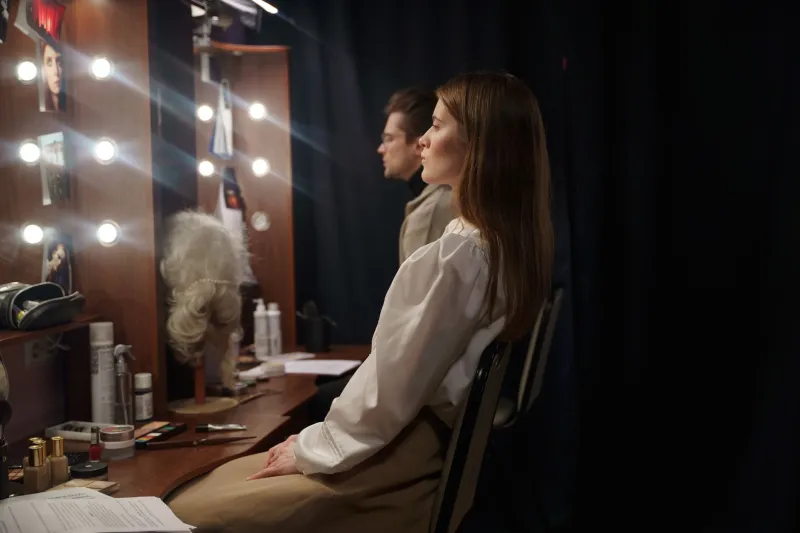
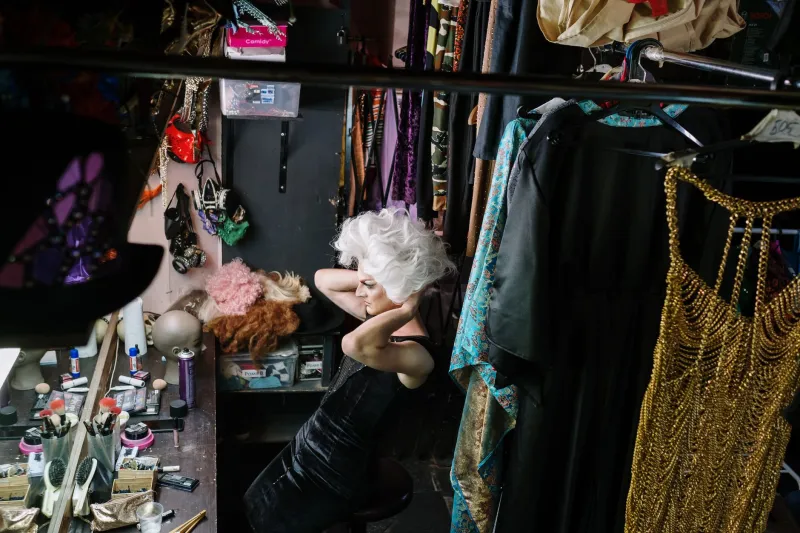
Then the quiet bit, which nobody warns you about. You sit in a dressing room that smells faintly of someone else, with a costume that does not quite fit, and you wait. That is the hardest hour of the whole job. The adrenaline arrives early and has nowhere to go.
I have learned to fill it with small, dull tasks. Check the pockets of the costume. Check that the mic tape will not pull. Write the entrance I am most frightened of on a sticky note and put it where I will see it at the top of act two but not before.
Standing in the Wings
The first entrance is the worst and then, quite suddenly, it isn't.
The trick is that the audience does not know you are a cover. They have paid for a night out and they are going to get one. The cast know, the crew know, the front of house know, and every single one of them is quietly on your side. The dresser who appears with a safety pin and a steady look is worth more than a week of rehearsal.
By the second scene the body takes over. Muscle memory is a strange and generous thing: you have stood in the wings for six weeks watching this show, and your shoulders know the shape of the part even when your head is still doing arithmetic about the next quick change.
After the Curtain
The bit nobody films. Notes in the dressing room while it is all still warm, written down before the adrenaline lies to me about what happened. A thank you to the stage management team, who had a harder night than I did. An email to the resident director with two notes and no excuses.
Then a very large cup of tea and a sleep that is either excellent or terrible, depending on how the second half went.
Five Things That Make the Next Call Easier
- Keep the prompt book current, even when you are not on. A book six weeks out of date is a rumour.
- Watch the show from the wings at least once a month. You learn things from the side that you cannot learn from a rehearsal room.
- Learn the crew's names. On the night, you will need to ask them for things very quickly.
- Rehearse the quick changes, not just the scenes. The panic is nearly always in the corridor, not on the stage.
- Write your notes within twenty-four hours. Memory is generous on the night and useless by Tuesday.
Being an understudy is mostly waiting, and then suddenly it is not. When the call comes at four o'clock, the job is not to be brilliant. The job is to be ready, be kind to the people who got you on, and let the work you did in the quiet afternoons do the talking.