The Six-Digit Handshake: What a Stage Door Keypad Really Lets You Into

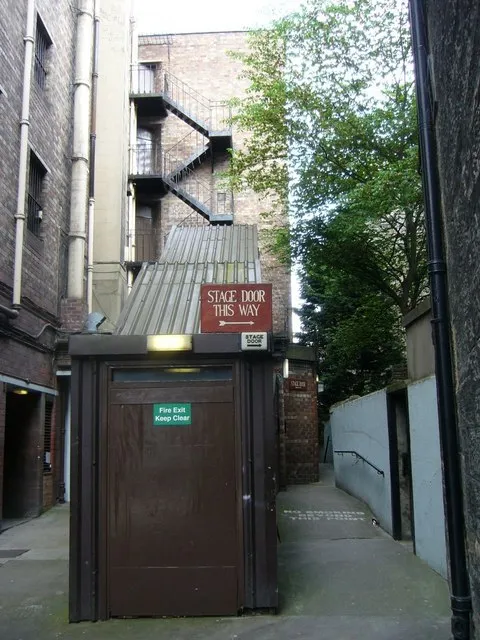
Photo: Basile Morin, CC BY 4.0, via Wikimedia Commons
There is a particular sound a stage door makes when someone who belongs punches in the code. It is not dramatic. It is a soft sequence of beeps, a click, a shoulder against the door, and then the building swallows them whole. No name badge, no clipboard, no explanation. Just six digits and the quiet confidence of someone who has done it a hundred times before.
I have always found that sound oddly comforting. A backstage door code is one of the least glamorous pieces of kit in any UK venue, sitting somewhere between a fire extinguisher and a dusty noticeboard. But it is also one of the most revealing. Ask who knows the code and you are not really asking about security. You are asking about trust, territory, and the strange little ecosystem that exists behind a working theatre.
The Number You Don't Write Down
Nobody writes the code down. That is the first rule. It gets passed along in whispers, by text, or by someone walking you to the door and saying, "It's the same as the year, but backwards, then a four." You nod as if this makes sense. You repeat it under your breath for the rest of the day like a phone number from a song lyric.
In practice, every venue has its own folklore around the code. Some are changed on a rota. Some are changed when someone leaves. Some appear to have been set in 2011 by a technician who has long since moved to Cornwall, and nobody has dared touch them since because the building works and the kettle boils and the show goes up. There is a deep, very British suspicion of fixing things that are not visibly broken.
What is interesting is how quickly a newcomer learns the hierarchy. The full-time staff know the code. The visiting company learn it for the week. The get-in crew probably know it before the building does. And then there are the people who absolutely should know it but do not, who stand at the door with a takeaway coffee and a hopeful expression, waiting for someone to let them in. We have all been that person. It is a humbling experience.
Fobs, Lanyards and the Hierarchy of the Jangle
If the keypad is the front line, the fob is the jewellery. A fob says something a code never can: I am not just passing through. I have a relationship with this building that involves a plastic disc and possibly a lanyard from a production that closed three years ago.
You can tell a lot from a fob. A visiting performer might have one for the week, clipped to a belt loop with the resigned air of someone who knows it will end up in a hotel bedside drawer. A venue technician might have a ring of them, each one worn smooth, each one attached to a different memory. The stage door keeper often has the most powerful fob of all, which is not a phrase I expected to write, but there it is.
There is a gentle comedy to the fob hierarchy. People jangle when they walk. You can hear someone coming down a corridor and know roughly how senior they are by the weight of their keys. It is not a perfect system, but it is a system. And like all backstage systems, it runs on habit and goodwill rather than anything written in a handbook.
When the Code Changes
A code change is a small event with a surprisingly large emotional footprint. It usually happens after a turnover, a security review, or the discovery that someone who definitely should not have access has been using the loading bay as a shortcut to the pub. The email goes out. The keypad is reset. And for about forty-eight hours, the building is full of people pretending they already knew.
I have seen a code change bring out the best and worst in a company. There is always one person who has memorised the new number instantly and now walks around like they have been handed the keys to the kingdom. There is always another who has been at the venue for fifteen years and is quietly furious that they now have to knock. The stage door keeper, meanwhile, stands by the entrance with the calm of a diplomat, letting people in and saying, "New code, love, I'll text it to you," in a tone that suggests this is all perfectly normal and not at all a minor coup.
Because that is the thing about a code change. It is never just about security. It is about who gets told, who gets forgotten, and who has to ask. In a building where everyone is used to belonging, being locked out for ten minutes can feel disproportionately personal.
The Door That Remembers You
What I love most about these doors is that they are not actually that secure. Not really. A determined person could probably find another way in. The code is not Fort Knox. It is a social contract with a keypad attached.
It says: we trust you to come in, and we trust you to know when to leave. It says: this is not the public entrance, and that matters. It says: you are part of the small, unglamorous machinery that makes the show happen, and we have given you six digits to prove it.
On a damp Tuesday in November, when the loading bay smells of wet tarmac and the heating is doing its usual half-hearted thing, that little beep is a genuinely lovely sound. It is the sound of a building saying, "Alright, you're in." No fanfare. No ceremony. Just a click, a push, and the warmth of a corridor that smells faintly of coffee and old rope.
A Small Ritual of Belonging
So here's to the six-digit handshake. To the fobs that rattle in the dark. To the stage door keepers who know exactly who is coming through the door before they even reach for the keypad. And to the quiet, ridiculous, deeply human business of trusting people with a number that is never written down.
If you ever find yourself standing outside a stage door, waiting for someone to let you in, don't worry. You will learn the code soon enough. And one day, you will be the one holding the door open for the next person, saying, "It's easy, mate. Just remember the year backwards, then a four."